

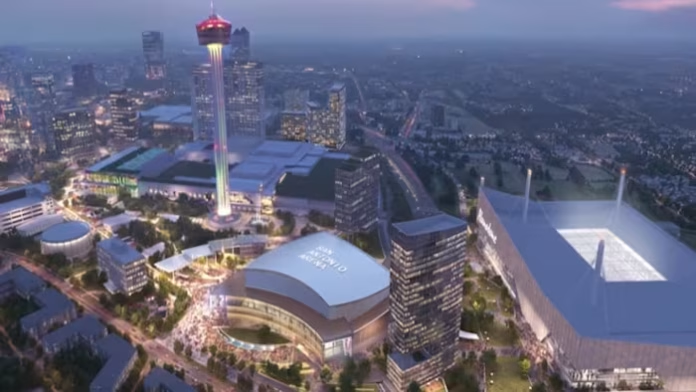
San Antonio’s Arena Deal: Navigating Hurdles for a New Sports Venue
A nonbinding agreement with potential complications lies at the center of San Antonio’s efforts to secure a new $1.3 billion arena for its beloved Spurs. As Mayor Gina Ortiz Jones and city council members prepare to transform a tentative term sheet into concrete contracts, discussions around financial commitments and community benefits are heating up.
Mayor’s Aspiration for More
In a candid statement, Mayor Jones expressed her desire to push for enhancements to the initial deal. “100%,” she proclaimed when asked if the city could secure better terms. Her enthusiasm for the negotiation process suggests a determination to advocate for the community’s best interest. It’s clear she wants to ensure that this deal doesn’t just meet the status quo—it ought to exceed it.
City staff reported during a briefing that they aim to finalize negotiations by the end of 2026. But, as arena discussions can be tricky, the timeline could shift based on contract complexities. It’s a balancing act, and everyone involved knows it.
Breakdown of the Financial Agreement
The term sheet, approved by the city council back in August, lays out an ambitious funding plan. The total project cost is estimated at $1.3 billion, with contributions of up to $489 million from the city, $311 million from the county, and a hefty $500 million backing from the Spurs themselves. Interestingly, the county’s funding share received voter approval last November, indicating local desire for the project but leaving many questions unanswered about its long-term implications.
Yet, with such grand plans come grumbles, especially from Jones, who questioned whether $2.5 million in annual payments under a community benefits agreement is sufficient. She compared it to someone asking for $100 but being offered just a fraction of a penny—frustrating and inadequate, to say the least.
Community Benefits: More Needed?
Jones’s pointed remarks reflect a broader community sentiment about the arena deal. It’s not just about sports; it’s about what the arena brings to residents. Throughout her discussions, she’s sought to emphasize that the city’s $4 billion budget deserves more than a token gesture.
“I want people to put that $2.5 million in context,” she said. It’s a powerful statement that resonates: residents want tangible benefits from their investments.
The community benefits agreement comes with expectations. It’s meant to guarantee annual payments and foster development—but is it enough? Current discussions suggest that many San Antonians feel undersold in this negotiation.
Council Dynamics: Diverging Opinions
Not everyone on the city council shares the same view. Jones’s push for community feedback reflects growing concerns over transparency and accountability. During the discussions, Councilman Marc Whyte stressed the importance of maintaining trust with future business partners. He insisted that honoring agreements is vital for long-term relationships.
However, some council members voiced dissent, suggesting that the nonbinding nature of the term sheet could leave room for adjustments. Councilman Jalen McKee-Rodriguez pointed out how past conversations had indicated that the terms were still flexible. This begs the question: how will these discussions evolve in the face of community expectations?
Looking Ahead: New Developments on the Horizon
Despite tensions, the city is ready to make strides in its arena goals. In the coming days, city council members will vote on a proposal to purchase federal properties near Hemisfair, with more than $30 million allocated from the Spurs. Under this plan, the city would lease these properties to private developers, potentially kickstarting a mixed-use development that could spur local growth.
But what happens if the arena deal fails? The city would either reimburse the Spurs or relinquish control of the new properties. It places additional pressure on the city council to nail down a deal that benefits all parties involved, ensuring that the dream of a new arena doesn’t crumble under the weight of bureaucracy.
For the residents of San Antonio, it represents a unique opportunity for economic growth, community enhancement, and civic engagement. When city officials and local leaders don’t prioritize community voices, the entire project risks losing public trust.
Beneath the surface of this negotiation lies a potent question: What does it mean to invest in your city? San Antonio’s residents expect and deserve more than basic promises. They want assurance that their city council is not only fighting for their interests but also listening to their needs.
As negotiations progress, a collective focus on accountability, transparency, and community benefits should be top priorities. If done right, this arena can emerge as a centerpiece for cultural events, entertainment, and civic pride, transforming the landscape for generations to come.
In this ever-shifting environment, the San Antonio arena deal serves as a lesson, a reminder that community involvement and governmental commitments must go hand-in-hand. After all, it’s not just about building structures; it’s about building trust. And that’s the real foundation for any thriving city.