

Maria Corina Machado Gifts Her Nobel Prize to Donald Trump: A Bold Move or a Misstep?
In an unexpected twist that combines politics, symbolism, and a hint of controversy, Venezuelan opposition leader Maria Corina Machado has given her Nobel Peace Prize to former President Donald Trump. This gesture, intended to recognize Trump’s support for Venezuelan democracy, has drawn sharp criticism from the Norwegian Nobel Committee, igniting discussions about the nature and ownership of such prestigious awards.
A Surprising Presentation
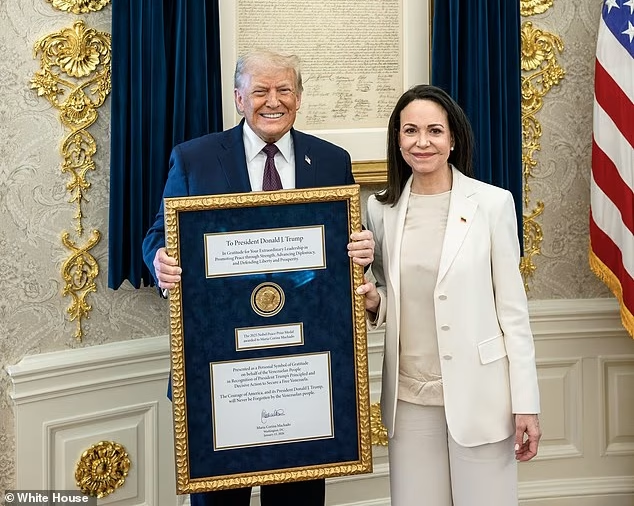
This week, Machado arrived at the White House for a highly publicized meeting with Trump, marking their first encounter since the U.S. military detained Venezuelan dictator Nicolás Maduro earlier this month. There, she presented Trump with her Nobel medal, awarded to her for her unwavering commitment to democracy in Venezuela. A photo capturing Trump beaming beside Machado, the medal prominently displayed, soon went viral on social media.
“I presented the president of the United States with the Nobel Peace Prize,” Machado proudly declared. Her intention? To honor what she called Trump’s “unique commitment to our freedom.”
The Nobel Committee Responds
However, this bold gift did not go unchallenged. The Norwegian Nobel Committee swiftly issued a statement emphasizing that while medals can be physically transferred, the title of a Nobel laureate cannot be gifted or revoked. Their tweet read, “Once a Nobel Prize is announced, it cannot be revoked, shared, or transferred to others.” This pointed statement aimed to clarify the rules surrounding their prestigious award, which many believe should retain a level of dignity and exclusivity.
Despite Machado’s historical reference to a medal given to the family of Marquis de Lafayette by George Washington, the Committee’s ruling stands firmly against such exchanges.
Reactions and Implications
Trump was quick to reciprocate Machado’s gesture, expressing his gratitude on Truth Social, stating, “It was my great honor to meet María Corina Machado today.” The former president’s supportive message indicates a shared enthusiasm for their political alliance, fueling speculation about future collaboration on Venezuelan issues.
Machado’s gift raises significant questions: What message does this send about the intersection of politics and honor? Does it dilute the value of such prestigious awards in the eyes of the global community? The implications stretch beyond the personal—tapping into broader discussions about how political symbols are wielded and interpreted.
The Broader Context: Venezuelan Politics
To understand this moment, we need to look at the broader context of Venezuelan politics. Machado has been a leading figure in the country’s opposition movement, advocating for change in a political landscape marked by turmoil and authoritarianism. Her welcome in Washington signals a significant shift from her previous state of political exile and isolation.
Just last year, she was forced to flee after being temporarily detained by Maduro’s government. Her appearance in D.C. came just after a pivotal series of events, including the U.S. government’s position regarding Venezuela’s recent elections, which they deemed illegitimate. However, instead of pushing for regime change, the Trump administration has been seen as engaging with both sides of Venezuela’s political dichotomy—maintaining relations with Maduro’s second-in-command while still advocating for Machado’s cause.
A Meeting of Minds on Capitol Hill
After her White House visit, Machado headed to Capitol Hill, where she met with a bipartisan group of lawmakers, including notable figures like Senators Ted Cruz and Alex Padilla. The atmosphere was charged with hope as supporters rallied outside the White House, welcoming Machado back to the political arena.
But it wasn’t all cheers; Machado dodged questions from reporters about her meeting with Trump, leaving many speculating about the real impact of this political alliance on Venezuela’s future. The complexity of U.S.-Venezuelan relations adds layers to this story—simultaneous engagement with the regime while promoting democracy often reveals the uncomfortable gray areas in diplomacy.
What This Means for the Future
In a world where political loyalties can shift like sand, Machado’s actions prompt us to consider the importance of consistency in democratic values. By handing her Nobel Prize to Trump, she aligns herself with a leader who has sought recognition from the same institution. It raises the question: Is it feasible to navigate both diplomatic engagement and ideological purity?
For the residents of Venezuela, this situation holds profound significance. The hope for democracy lies nestled within the actions of leaders like Machado and their ability to forge effective alliances abroad. Their struggles resonate deeply, magnifying hopes for freedom and justice amidst years of hardship.
A Final Reflection
As we dissect the events surrounding Machado’s gesture, we find more than mere political theatrics; we uncover deeper themes of loyalty, recognition, and the weight of historical symbols. As future political leaders grapple with maintaining integrity amidst ever-changing alliances, Machado’s bold move serves as a reminder of the complexities inherent in international relations. It asks us to consider how we view honor, legacy, and what it means to truly support freedom.
In an era defined by fluctuating allegiances, the story of Maria Corina Machado and her Nobel Prize challenges us to examine our own values, inspiring conversations about freedom, recognition, and the often messy pathways to democracy.